Modular Construction and Housing Affordability in Pennsylvania
Modular Construction and Housing Affordability in Pennsylvania
Housing affordability remains one of the most pressing challenges facing communities across Pennsylvania. Demand continues to outpace supply, while rising construction costs, labor shortages, and schedule uncertainty limit the industry’s ability to deliver housing efficiently.
Addressing this gap requires practical solutions that increase housing supply, improve cost predictability, and support local jobs. Modular construction is one of those solutions.
Pennsylvania’s Housing Supply Gap
Pennsylvania is facing a growing housing shortfall. State level projections indicate the Commonwealth could be nearly 185,000 homes short if construction activity does not increase meaningfully in the coming years.
This supply imbalance places sustained pressure on rents and home prices, particularly in small cities and legacy communities where new housing production has lagged demand.
Increasing housing supply is the only long-term path to improving affordability. That requires construction methods that can deliver housing faster, more predictably, and at scale.
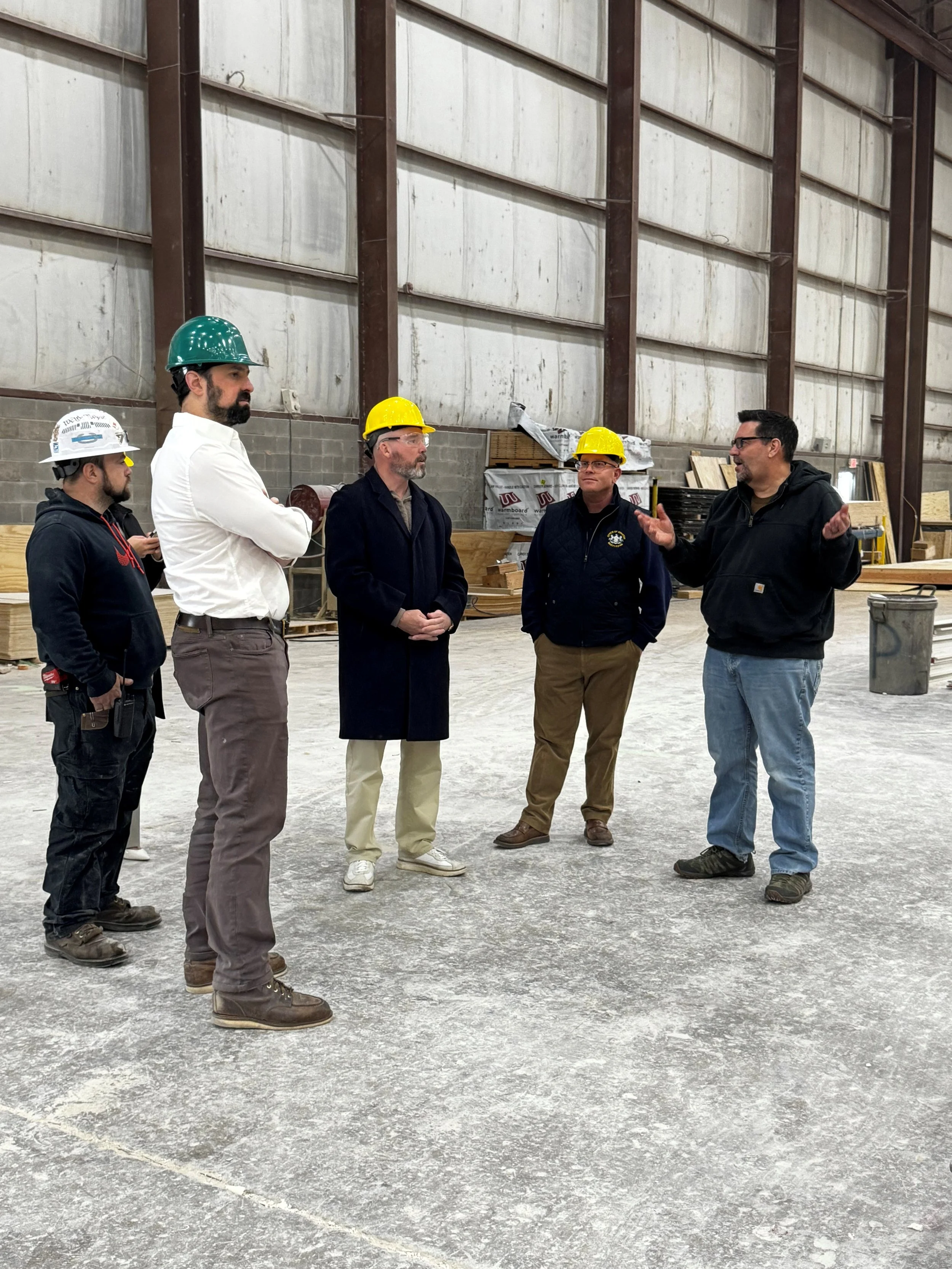
Director of Engineering, Mike Kirby, discussing modular construction.
A Local Example: Studebaker Lofts in Olyphant
During a recent visit to our manufacturing facility, Marty Flynn toured our production line and discussed housing supply, affordability, and economic development.
At the time of the visit, a project located in his district was actively in production.
Studebaker Lofts is a 26 unit townhouse-style development located along Hull Avenue and Ash Street in Olyphant, Pennsylvania. The site forms an L-shaped layout and reflects the history of the property, where a Studebaker vehicle repair facility once operated. A large Studebaker sign discovered on-site is planned to be preserved and incorporated into the completed development.
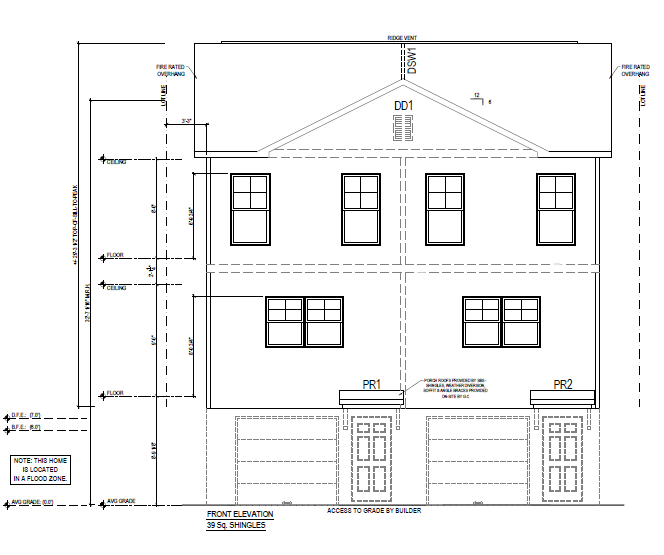
Modular Duplexes with Drive Under Garage
Modular Duplex Design and Site Layout
The project consists of 13 duplex buildings, delivering 26 total living units. Each duplex is constructed from four modular units, resulting in 52 modules overall. All modules measure 16 feet by 40 feet and are fabricated in Signature’s controlled manufacturing environment.
Each unit follows a consistent two-story floor plan with two bedrooms and one and a half bathrooms per side. To create visual variation across the site, two exterior roof designs are used.
One design features a forward-facing gable roof, while the second uses a transverse roof with the ridge running left to right. These rooflines are alternated throughout the development to maintain a residential scale and avoid repetition.
The project is being developed by Dinamico and the modular townhouses are installed in the second quarter of 2026.
How Modular Construction Accelerates Housing Delivery
Modular construction shifts a significant portion of the building process into a controlled manufacturing environment. Homes and apartments are fabricated indoors rather than built entirely on-site.
This approach reduces weather delays, improves quality control, and allows multiple phases of construction to occur simultaneously.
For projects like Studebaker Lofts, this results in faster and more predictable project timelines. In constrained housing markets, speed directly impacts supply.
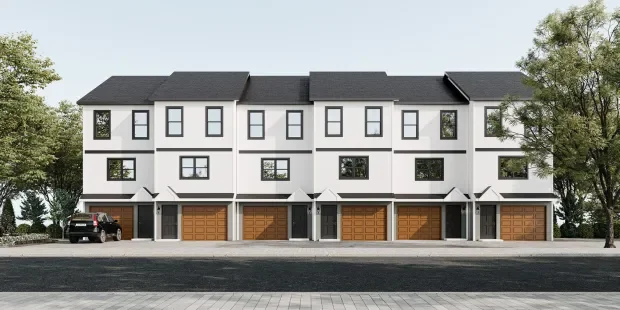
Townhouses built over garages with break away walls for flooding.
Cost Predictability in a Volatile Construction Market
Traditional construction faces growing exposure to labor availability issues. According to the Bureau of Labor and Statistics, “Between 2003 and 2020, the percentage of construction workers who were age 55 and over nearly doubled, from 11.5 percent to 22.7 percent.” Risks such as construction labor (aging out of job market), material price volatility, and schedule overruns can disrupt projects and strain budgets, particularly for small and mid-sized housing developments.
Modular manufacturing improves cost predictability by standardizing production, outsourcing labor to the factory, and reducing on site uncertainty. This allows developers to plan more confidently and helps projects move forward without late stage cost escalation.
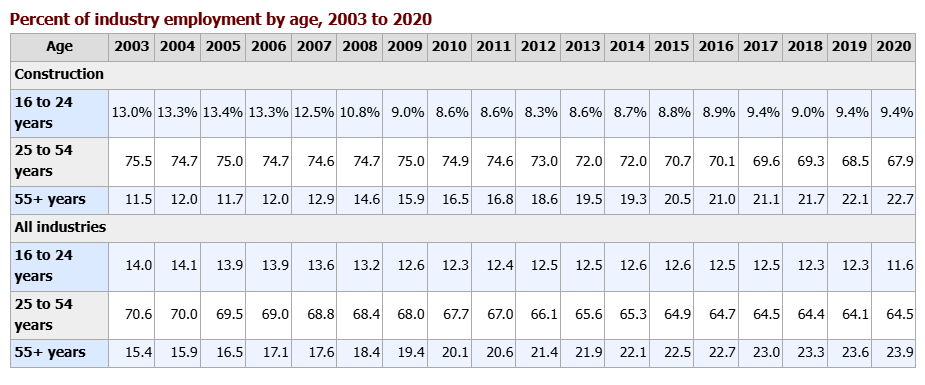
The Construction Industry: Characteristics of the Employed, 2003–20
Manufacturing Jobs and Economic Development in Pennsylvania
Modular construction supports skilled manufacturing jobs that remain in Pennsylvania. Carpenters, electricians, engineers, logistics teams, and project managers all contribute to factory built housing. These roles provide stable employment while supporting a broader regional supply chain.
Housing production and economic development are aligned outcomes. Modular manufacturing allows communities to add housing while strengthening local industry and workforce participation.

A Practical Tool for Addressing Affordability

Modular construction is not a single solution to Pennsylvania’s housing affordability challenge, but it is a proven and scalable tool. It allows communities to add housing faster, manage costs more effectively, while still support local jobs.
Projects like Studebaker Lofts show how factory built construction can deliver real housing in Pennsylvania communities, while respecting local context and site history. Expanding the use of modular construction will be an important part of closing the housing supply gap and improving affordability across the state.
We appreciate Senator Flynn taking the time to tour our facility, engage with our team, and see firsthand how modular manufacturing is supporting housing delivery and economic development in his district and throughout Pennsylvania.